Online Typing Competition: Test Your Speed, Accuracy, and Focus
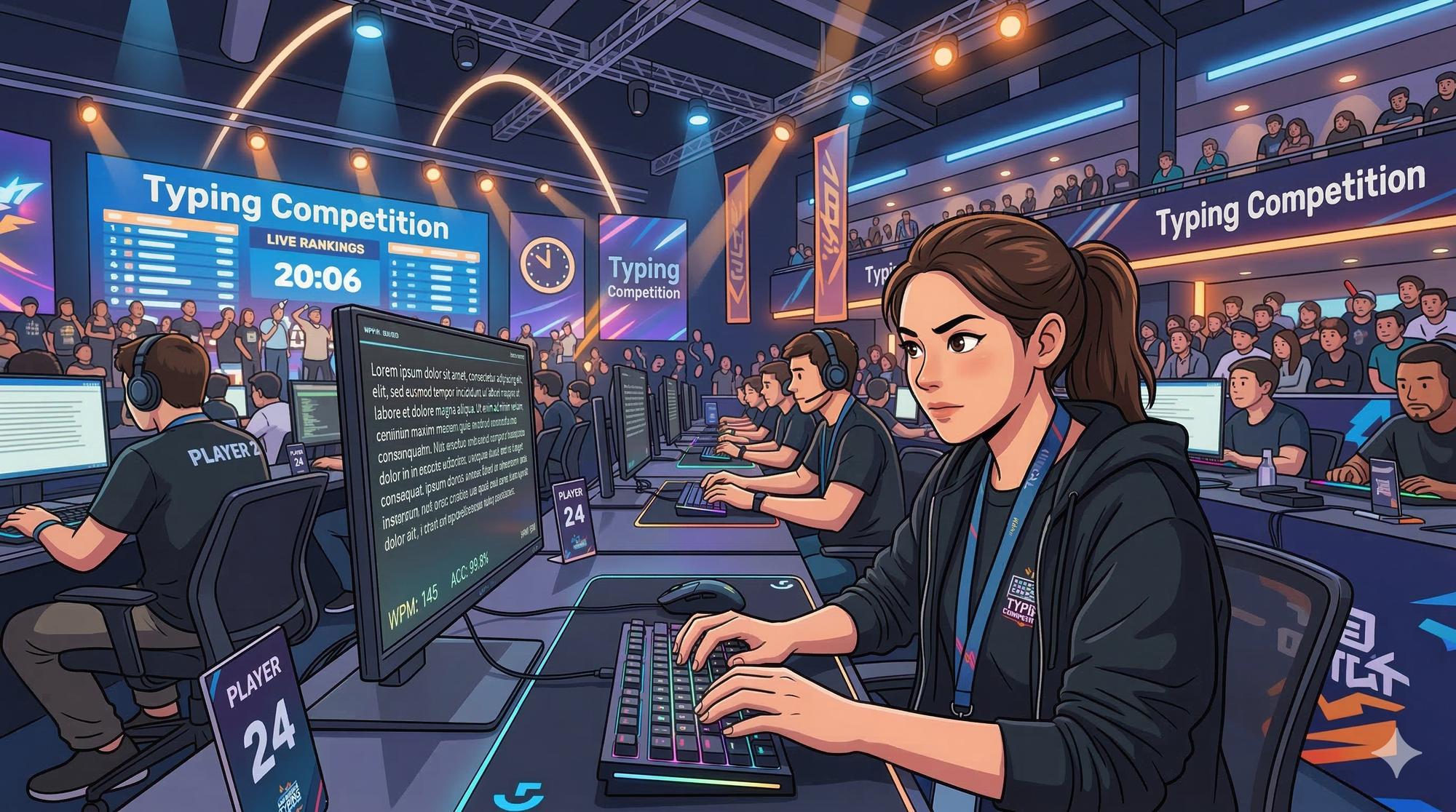
An online typing competition is a timed challenge where participants compete to type quickly and accurately. Unlike a normal typing test, a competition adds excitement through leaderboards, live scores, time limits, and sometimes multiplayer races.
Typing competitions are popular among students, office workers, gamers, and anyone who wants to improve their words per minute. You can join alone, compete with friends, or practice before a school or workplace event.
What Is an Online Typing Competition?
An online typing competition asks participants to type a passage, word list, or random text within a fixed time. The system measures how many correct words or characters each person types and ranks them on a leaderboard.
Most competitions measure:
- Words per minute, or WPM.
- Accuracy percentage.
- Total correct characters.
- Errors and corrections.
- Time taken.
- Consistency across multiple rounds.
A good competition does not reward reckless typing. The best results usually come from a balance of speed, accuracy, and focus.
Why Join a Typing Competition?
A typing competition is more than a game. It gives you a clear reason to practice and helps you measure progress against real goals.
People join online typing contests to:
- Improve typing speed and accuracy.
- Prepare for school computer exams.
- Build confidence before job assessments.
- Challenge friends or classmates.
- Track personal progress.
- Make typing practice more enjoyable.
- Develop focus and hand coordination.
Even if you do not win, competing can reveal useful information about your typing habits. You may discover that you slow down on punctuation, numbers, capital letters, or unfamiliar words.
How an Online Typing Contest Works
Most online typing contest platforms follow a simple process:
- Choose a competition or practice room.
- Select a test duration, such as one, three, or five minutes.
- Read the text before the timer starts, if allowed.
- Type the passage as accurately as possible.
- Check your WPM, accuracy, and ranking.
- Review errors and practice weak areas.
Some competitions use live leaderboards, while others let you compare results with previous attempts. Multiplayer typing races may show opponents’ progress in real time, which can make the experience more exciting.
Typing Competition WPM: What Is a Good Score?
Your typing competition WPM score depends on your experience, practice routine, and the type of text used. Do not compare a casual result with a professional competitor’s score without considering accuracy.
| Typing speed | General level |
|---|---|
| 20–30 WPM | Beginner |
| 30–40 WPM | Average |
| 40–55 WPM | Good |
| 55–70 WPM | Fast |
| 70–90 WPM | Very fast |
| 90+ WPM | Competitive level |
For most casual competitions, 40–55 WPM is a solid target. Competitive typists often aim for 70 WPM or higher, but accuracy remains important. A fast score with many errors may rank lower than a steady score with fewer mistakes.
Accuracy Matters More Than Speed
Many beginners focus only on speed, but typing competition accuracy can decide the final result. Incorrect characters may reduce your net WPM or lower your ranking, depending on the competition rules.
To improve accuracy:
- Keep your eyes on the screen.
- Type at a pace you can control.
- Use the correct finger for each key.
- Avoid looking down at the keyboard.
- Practice difficult words and punctuation.
- Slow down if your error rate rises.
- Review mistakes after every round.
A useful rule is to aim for at least 95 percent accuracy. Once your accuracy is stable, increase your speed gradually.
1, 3, and 5 Minute Typing Competitions
Different competition lengths test different skills.
| Format | Best for | Main challenge |
|---|---|---|
| 1 minute | Quick practice and warm-ups | Starting strong |
| 3 minutes | Balanced competition | Maintaining rhythm |
| 5 minutes | Endurance and focus | Avoiding fatigue and errors |
A 1 minute typing competition is ideal for beginners. A 3 minute typing competition gives a better picture of consistency. A 5 minute typing competition is useful for building endurance, especially if you want to prepare for longer assessments.
How to Prepare for a Typing Competition
Preparation does not require hours of practice. Short, focused sessions can make a big difference.
Use this simple routine:
- Warm up for two minutes with easy text.
- Practice home-row drills for five minutes.
- Type common words and sentences for five minutes.
- Take one timed practice test.
- Review your errors.
- Repeat the routine three to five times per week.
Before a competition, avoid trying a completely new typing style. Stick to the technique you already know, keep your hands relaxed, and focus on steady rhythm.
Typing Competition Practice Plan
A structured plan helps you improve without burning out.
| Week | Focus | Practice goal |
|---|---|---|
| Week 1 | Accuracy and home row | 10–15 minutes daily |
| Week 2 | Speed building | 15 minutes daily |
| Week 3 | Punctuation and numbers | 15–20 minutes daily |
| Week 4 | Timed competitions | 20 minutes, three times weekly |
At the end of each week, take a timed test and record your WPM, accuracy, and common errors. Small improvements add up quickly when you practice regularly.
Typing Competition for Students
A typing competition for students can make computer class more engaging. Schools can organize class-level or grade-level contests, with separate categories for beginners and advanced typists.
For school events, use fair rules:
- Give every participant the same text or difficulty level.
- Use the same time limit for each round.
- Count accuracy along with WPM.
- Allow practice rounds before the final competition.
- Recognize improvement, not only the fastest score.
- Keep results private if students prefer.
A competition should encourage learning, not create pressure. Recognizing personal progress can motivate students more effectively than focusing only on winners.
Typing Competition With Friends
A typing competition with friends is an easy way to make practice social. You can challenge a classmate, coworker, family member, or online friend to a one-minute race.
Set simple rules before starting:
- Use the same text and time limit.
- Compare both WPM and accuracy.
- Take turns choosing the practice passage.
- Keep a weekly scoreboard.
- Reward improvement, not only the highest score.
Friendly competition can make practice more consistent. Just make sure the goal is improvement, not embarrassing someone who is still learning.
Common Mistakes in Typing Competitions
Many participants lose points because of avoidable habits. The most common issues include:
- Typing too fast at the beginning.
- Looking down at the keyboard.
- Ignoring punctuation and capital letters.
- Using only two or three fingers.
- Panicking after one mistake.
- Practicing only on competition day.
- Focusing on WPM while ignoring accuracy.
A calm approach works better. Read a few words ahead, type smoothly, and correct only when necessary. Steady rhythm often produces better results than bursts of speed.
How to Improve Your Competition Score
To improve your typing speed competition result, focus on technique before raw speed.
- Sit upright with relaxed shoulders.
- Keep your wrists level and comfortable.
- Place fingers on the home row.
- Use all ten fingers.
- Keep your eyes on the screen.
- Practice difficult letter combinations.
- Take short breaks between sessions.
- Track your progress weekly.
Do not chase a high score by sacrificing accuracy. A controlled pace usually leads to better long-term improvement.
Online Typing Competition Rules
Rules vary by platform, but most competitions use similar standards. Before joining, check whether the event allows backspace, uses net WPM or gross WPM, and counts punctuation and capital letters.
Common rules include:
- A fixed time limit.
- The same text for all participants.
- Accuracy included in the final score.
- No copying text from another source.
- No automated typing tools.
- One attempt per round, unless practice rounds are allowed.
- Results based on correct characters or net WPM.
Reading the rules before you start can prevent frustration and help you choose the right strategy.
What Is an Online Typing Competition?
An online typing competition is a contest, in
which typists compete at a certain speed, to see who can make the fewest number
of mistakes while typing specific passages. These competitions usually measure:
Type Speed (Words Per Minute - WPM): The number
of words you type per minute.
Accuracy (%): How mistake-proof you type.
Consistency: A measure of how well you keep going throughout
the text.
Durability: TYPING, where you don’t have a time
that your words come up and do not fade or leave a mark.
Contests can range from time-based (1–10
minutes), text-oriented (paragraphs, essays or code) to game-style challenges
with interactive exercises.
Platforms like typingst. com, taptaptyping. com,
and typingtestai. com] play live online contests where players can compete
against friends, foreign competitors or computer scoring.
Speaking of online typing competitions, why
should we bother to take part in one?
Some of the advantages of participating in online
typing competitions include:
Improve Typing Speed and Accuracy
Contests make you type faster, but also more
accurate as the time counts down. Platforms like typingst. com, so you can
train to become better at typing in terms of WPM and accuracy.
Gain Recognition
Lot of online contests offer the leaderboards and
certificates. A high rank or certification builds confidence and credibility.
Fun and Engaging Practice
Typing competitions make learning exciting.
Gamified platforms like taptaptyping. com Practice with rewards, points and
rankings like a game.
Professional Advantages
Quick and accurate typing skills are beneficial
to remote work, data entry, transcription and content writing. Competitions
make you show off what you can do under pressure.
Community Interaction
Playing online also introduces you to a worldwide
community of typists who share tips, motivation and inspiration.
How Online Typing Competitions Work
The majority of competitions look like this:
Registration
Register at sites such as typingst. com,
taptaptyping. com, or typingtestai. com.
Select type of competition: speed, accuracy or
timed games.
Select Text
Short paragraphs, long reads, or just some random words.
Some platforms host theme-based contests or
coding competition.
Timed Typing
Subjects are required to type the text but not
exceed the time limit provided.
You can see your speed and accuracy, you know.
Scoring
Words Per Minute (WPM): Speed only.
Accuracy %: Measures precision.
Adjusted WPM: Accounts for errors.
Rankings: Leaderboards display top participants.
Results and Recognition
Winners are awarded certificates, badges or
digital prizes.
AI-powered platforms like typingtestai. com
generate detailed performance reports.
Best Websites & Apps for Online Typing
Competitions
Frequently Asked Questions
What is an online typing competition?
It is a timed contest where participants type text and compete based on WPM, accuracy, or both.
How is WPM calculated in a typing competition?
Most platforms calculate WPM by dividing typed characters by five, then dividing by the number of minutes. Accuracy may reduce the final net score.
What is a good WPM for a typing competition?
For casual competitions, 40–55 WPM is a strong target. Competitive typists often aim for 70 WPM or higher.
Can I join a typing competition for free?
Yes. Many online platforms offer free practice rooms, timed tests, and public leaderboards.
How can I win a typing competition?
Focus on accuracy, steady rhythm, and consistent practice. Avoid rushing at the start and review your common errors after each round.
Final Thoughts
An online typing competition is a fun and practical way to improve your keyboard skills. Whether you compete with friends, classmates, or players around the world, focus on accuracy first and build speed gradually.
Take a baseline test, practice for 10–20 minutes a day, and track your WPM weekly. With consistent effort, you can type faster, make fewer mistakes, and feel more confident in every competition.